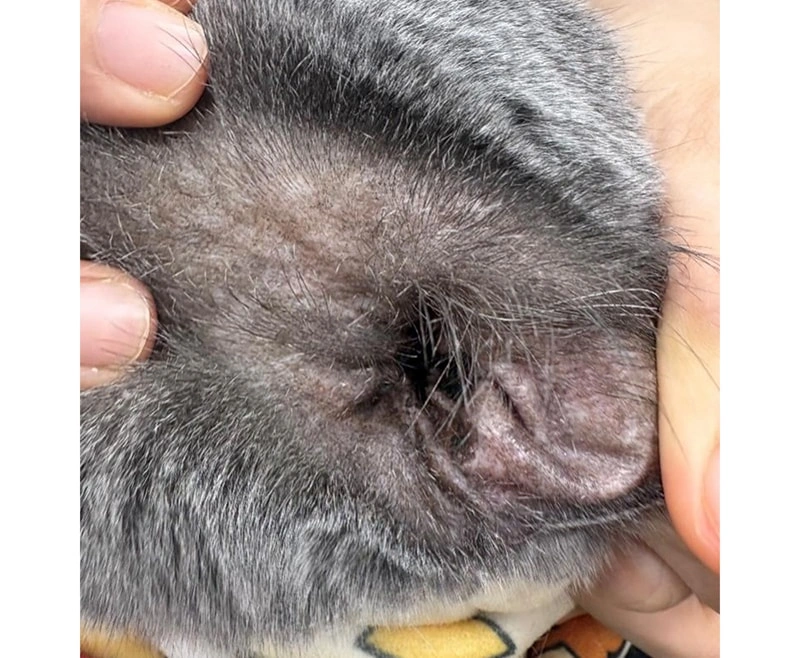
Ear problems are easy to overlook until your pet starts shaking their head, scratching constantly, or developing dark debris inside the ear. Many pet parents ask the same questions: Is it just wax? Could it be ear mites? Can ear mites come back after treatment? And how often should ears be cleaned?
The answer depends on your pet’s symptoms, ear shape, lifestyle, and whether there is an infection or parasite involved. Ear wax can be normal, but ear mites, yeast, bacteria, and allergies can look very similar at home. A veterinary ear exam is the safest way to confirm the cause.
Normal ear wax is part of the ear’s natural cleaning system. It helps trap dust, debris, and small particles. A small amount of light yellow, tan, or brown wax can be normal, especially in dogs with floppy ears or pets that spend time outdoors.
Ear mites are different. They are tiny contagious parasites that live in the ear canal and feed on wax and skin oils. VCA Hospitals describes ear mites as a common cause of ear disease in pets and notes that they often cause ear irritation, scratching, head shaking, and dark waxy or crusty discharge.
Signs It May Be Normal Wax
It may be simple wax buildup if:
The wax is light yellow, tan, or soft brown
There is no strong odor
Your pet is not scratching intensely
There is no redness or swelling
Your pet does not seem painful when the ear is touched
The debris returns slowly, not immediately after cleaning
Mild wax is common and does not always mean the ear is infected.
Signs It May Be Ear Mites
Ear mites are more likely if you notice:
Dark brown or black debris
“Coffee ground” texture inside the ear
Strong itching or repeated scratching
Frequent head shaking
Redness or irritation around the ear
Crusts near the ear opening
Hair loss or scratches from self-trauma
More than one pet in the home showing symptoms
The “coffee ground” appearance is a classic warning sign, but it is not a guaranteed diagnosis. Yeast infections, bacterial infections, and heavy wax buildup can also cause dark discharge. VCA notes that other ear conditions can cause signs similar to ear mites, so diagnosis should not be based on appearance alone.
The Biggest Clue: Itching Intensity
The difference between wax and ear mites is often not just the color of the debris — it is the level of discomfort.
A pet with simple wax buildup may have mild irritation or no symptoms at all. A pet with ear mites often scratches intensely, shakes their head frequently, and may become uncomfortable when the ears are touched.
If your pet seems painful, restless, or obsessed with scratching, do not keep cleaning repeatedly at home. Excessive cleaning can make inflammation worse and may delay proper treatment.
Yes, ear mites can come back.
The most common reasons are:
Not all pets in the household were treated
Treatment was stopped too early
The pet had contact with an untreated infected animal
Bedding, shared spaces, or grooming tools were contaminated
The original problem was not mites but yeast, bacteria, or allergies
There is an underlying ear condition causing repeated debris
Today’s Veterinary Practice notes that reinfestation can occur readily and that all pets in the household that can be affected — including cats, dogs, and ferrets — should be treated when ear mites are confirmed. It also explains that untreated subclinical infestations are a major cause of reinfestation.
This is why ear mites should be treated as a household-level issue, not just a single-ear issue.
No. Cleaning can remove debris, but it does not reliably kill mites or stop their life cycle.
If your pet truly has ear mites, they usually need veterinary-approved parasite treatment. Cleaning may be part of the process, but medication is needed to eliminate the mites. Repeated cleaning without treatment may temporarily make the ear look cleaner while the underlying infestation continues.
Avoid using alcohol, hydrogen peroxide, essential oils, vinegar, or random home remedies inside the ear canal. These can irritate inflamed tissue and may be dangerous if the eardrum is damaged.
How Often Should Pet Ears Be Cleaned?
There is no single perfect schedule for every dog or cat. Ear cleaning frequency depends on breed, ear shape, wax production, allergies, swimming, outdoor exposure, and veterinary history. Texas A&M College of Veterinary Medicine notes that the frequency of cleaning should be determined by a veterinarian based on the pet’s needs.
A practical guideline:
Healthy Indoor Cats
Most healthy cats rarely need routine ear cleaning. Check the ears weekly, but clean only when you see mild visible wax or your veterinarian recommends it.
Healthy Dogs With Upright Ears
Usually every 3–4 weeks, or only when mild wax or dirt is visible.
Floppy-Eared Dogs
Every 1–2 weeks may be helpful, especially for breeds such as Cocker Spaniels, Basset Hounds, and Poodles.
Outdoor or Swimming Dogs
Weekly checks are recommended. Clean when needed, especially after swimming or heavy outdoor activity.
Pets With Allergies or Recurring Ear Problems
Follow your veterinarian’s schedule. Some pets need more frequent maintenance, while others may worsen with over-cleaning.
During Ear Infection or Ear Mite Treatment
Only clean as instructed by your veterinarian. Cleaning too often during inflammation can cause pain and irritation.
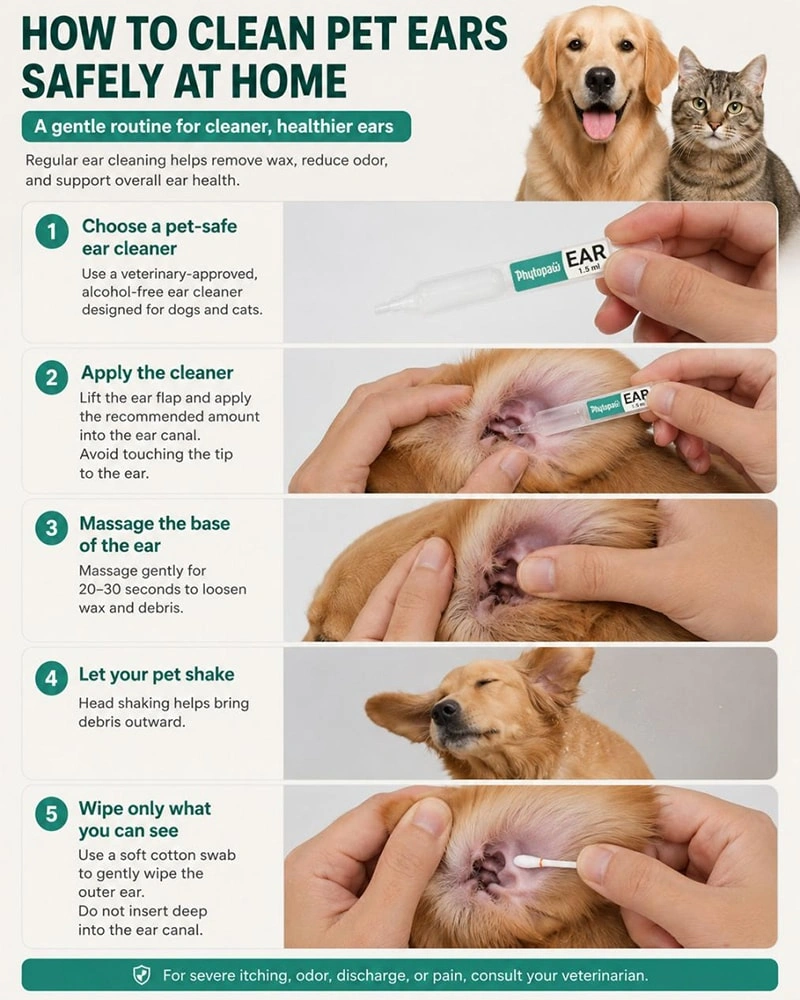
If your pet has only mild wax and no signs of pain, odor, swelling, or infection, you can follow a gentle routine.
1. Choose a pet-safe ear cleaner
Use a veterinary-approved, alcohol-free cleaner designed for dogs or cats.
2. Apply the cleaner
Lift the ear flap and apply the recommended amount into the ear canal. Do not touch the bottle tip to the ear.
3. Massage the base of the ear
Massage gently for 20–30 seconds to loosen wax and debris.
4. Let your pet shake
Head shaking helps bring debris outward.
5. Wipe only what you can see
Use gauze or a soft cotton pad to wipe the outer ear. Do not push cotton swabs deep into the canal.
For daily ear hygiene support, PhytoPaw Ear Fresh Kit can be used as part of a gentle ear care routine for pets prone to wax buildup, odor, or outdoor debris.
Recommended anchor text:
gentle daily ear care routine
Do not clean your pet’s ears at home if you notice:
Strong odor
Thick black discharge
Pus-like discharge
Blood or crusting
Severe redness or swelling
Pain when the ear is touched
Head tilt or balance problems
Repeated scratching after cleaning
Sudden hearing changes
These signs may indicate infection, mites, a foreign body, eardrum damage, or deeper inflammation. Cleaning alone is not enough and may worsen discomfort.
Ear wax is usually mild, slow-building, and not very itchy. Ear mites are more likely when dark “coffee ground” debris appears with intense scratching, head shaking, redness, or symptoms in multiple pets. However, wax, mites, yeast, and bacterial infections can look very similar, so a vet exam is the most reliable way to know.
Ear mites can come back if the full household is not treated or if the treatment is incomplete. For routine care, check ears weekly and clean only as needed based on your pet’s ear type, lifestyle, and veterinary guidance.
The safest approach is simple: observe regularly, clean gently, avoid harsh home remedies, and seek veterinary care when symptoms are painful, persistent, or recurring.
References
VCA Hospitals.
Ear Mites in Cats and Dogs.
Today’s Veterinary Practice.
Ear Mites: Uncovering, Treating, and Preventing Infestations.
Texas A&M College of Veterinary Medicine.
Ear Care for Pets.
Merck Veterinary Manual.
Mite Infestations in Animals.

Learn which natural methods can reduce your pet’s exposure to fleas, ticks, and mosquitoes—and why heartworm prevention still requires veterinarian-recommended medication.

Are natural eye-care products effective for pets? Learn which ingredients are safe around dogs’ and cats’ eyes, what to avoid, and how to build a gentle daily routine.
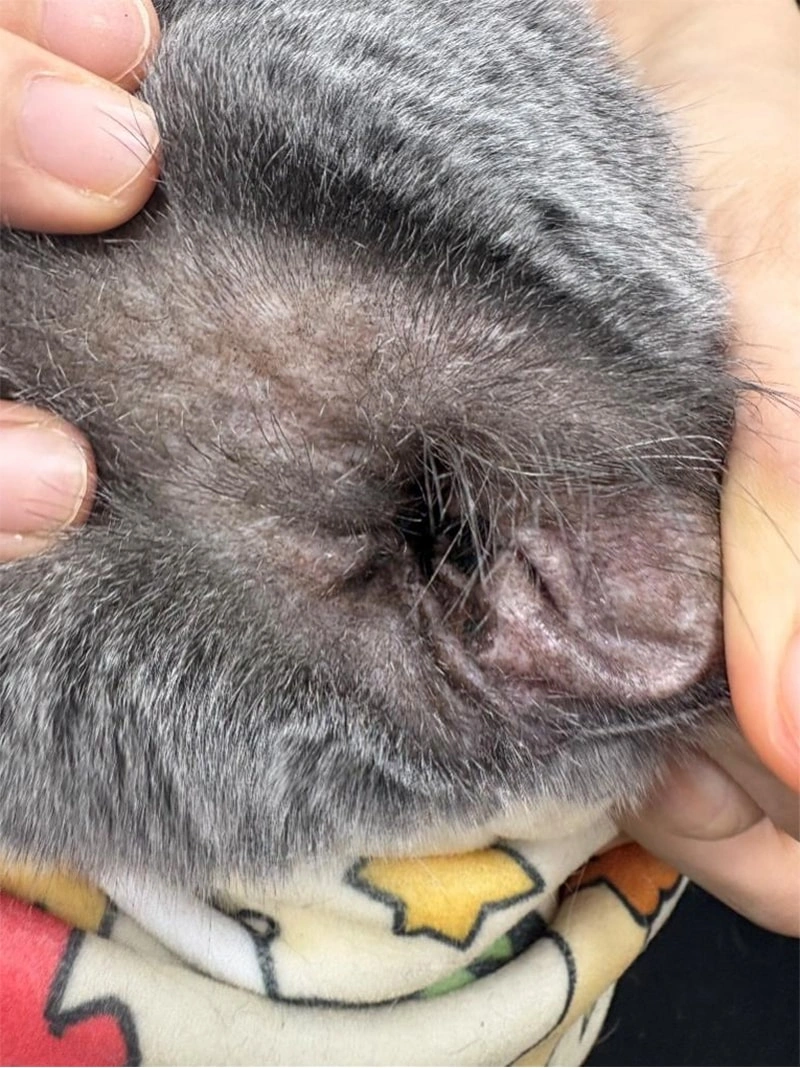
Ear problems are easy to overlook until your pet starts shaking their head, scratching constantly, or developing dark debris inside the ear. Many pet parents ask the same questions: Is it just wax? Could it be ear mites? Can ear mites come back after treatment? And how often should ears be cleaned?

Many pet parents want an easier way to support their cat’s oral health at home. Dental powders are popular because they can be added directly to food, but some formulas use seaweed or kelp-based ingredients. For cats with sensitive digestion, special diets, or thyroid concerns, some families may prefer a seaweed-free cat dental care routine.

A shiny, smooth coat is more than a beauty goal. For dogs and cats, coat condition often reflects overall skin health, nutrition, grooming habits, and daily comfort. A healthy coat should look glossy and feel soft, while dull, brittle, greasy, or flaky fur may suggest dryness, poor grooming, nutritional imbalance, allergies, parasites, or an underlying health issue. VCA notes that skin and coat appearance are useful indicators of general health in both dogs and cats.

Learn how to clean dogs teeth at home, what to use, how often to do it, and simple ways to support better pet dental cleaning as part of a gentle daily routine.
Vaccines and preventive care depend on species (dog/cat), age, lifestyle, and local laws—but there are reliable “core” basics almost every pet needs. Below is a practical schedule you can use to plan vet visits and ask the right questions.
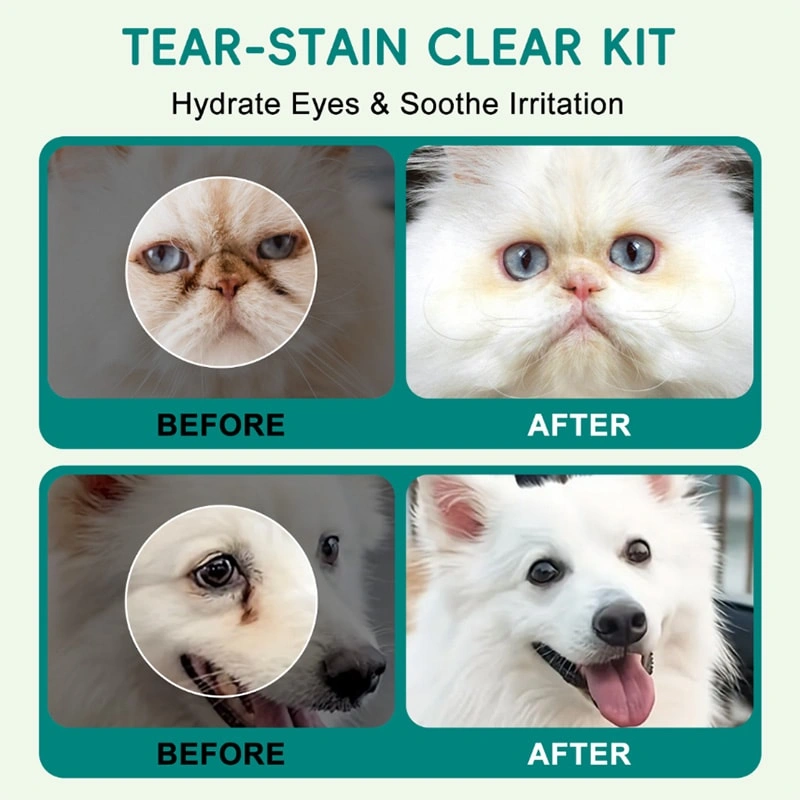
Tear stains are not a diagnosis—they’re a sign that tears (and the pigments inside them) are spending too much time on your dog’s face. Allergies can be one reason tear stains show up or get worse, but they’re only one piece of the puzzle. Many dogs have tear stains primarily because of anatomy, drainage, or mild eye irritation, even with “normal” tear production.
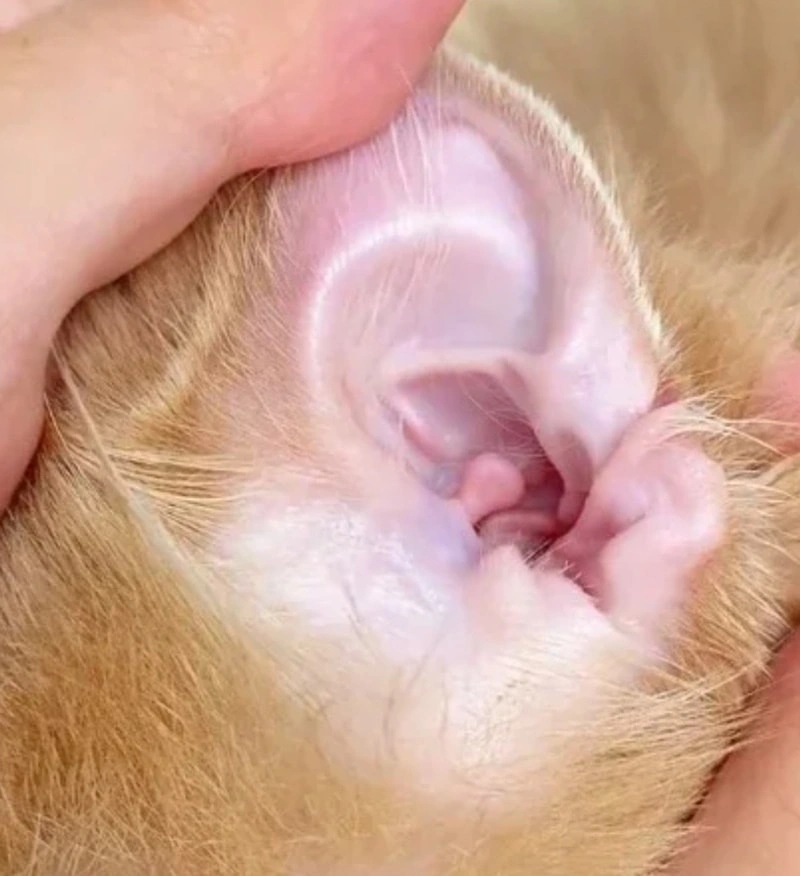
If you notice dark debris in your pet’s ears, it can be wax, ear mites, or an infection—and they can look similar at home. The safest approach is to compare symptoms + debris texture + recurrence, and seek veterinary confirmation when signs are strong.

Daily cleaning can be safe for sensitive dogs—but only when it’s gentle, minimal, and consistent. For many “sensitive skin dogs and cats,” the goal isn’t to scrub the skin spotless; it’s to remove irritants and moisture without stripping the barrier.
Copyright © 2026 by Phytopaw Pet Health Limited All Rights Reserved