Tear stains are not a diagnosis—they’re a sign that tears (and the pigments inside them) are spending too much time on your dog’s face. Allergies can be one reason tear stains show up or get worse, but they’re only one piece of the puzzle. Many dogs have tear stains primarily because of anatomy, drainage, or mild eye irritation, even with “normal” tear production.
This guide explains how allergies fit in, how to tell if allergies are likely involved, and what a safe daily routine looks like—especially for sensitive skin dogs and cats.
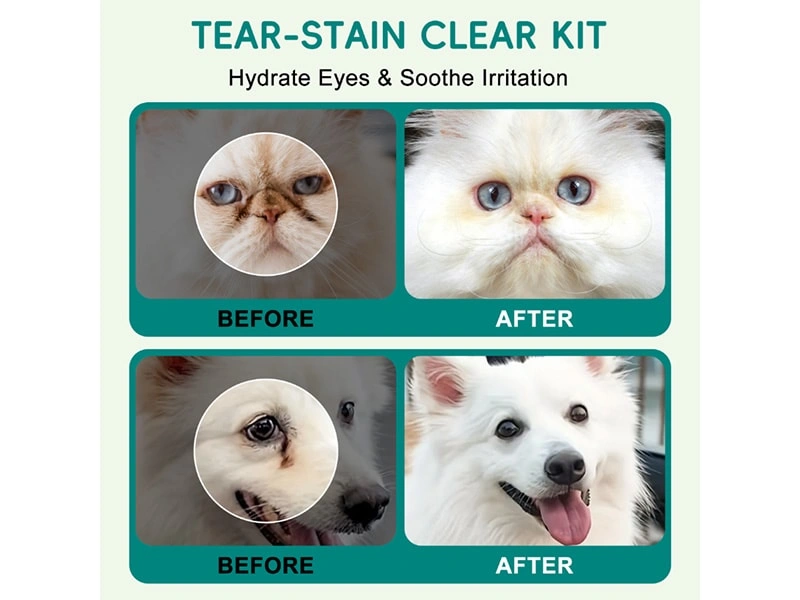
That rusty-red/brown coloring is usually linked to porphyrins, natural pigments found in tears. When tears overflow and sit on fur, porphyrins oxidize with air exposure and the color becomes more noticeable—especially on light coats.
So the key question becomes: Why are tears overflowing or staying wet on the face?
Allergies can contribute in two main ways:
A) Allergies increase tearing (epiphora)
When the eye surface is irritated—by pollen, dust, smoke, fragrance, mold, etc.—dogs may produce more tears as a protective response. Excess tearing can spill over and stain. VCA lists allergies among potential causes of excessive tear production in young dogs (and it applies broadly beyond puppies).
B) Allergies inflame skin and eyelids
Allergic dogs often have broader inflammation: itchy skin, inflamed eyelids, facial rubbing. That rubbing + moisture can keep the area wet and irritated, creating a cycle that worsens staining and skin redness. (AAHA notes allergies can present with skin signs; watery eyes can appear alongside allergic symptoms.)
Bottom line: allergies are a common contributor, but not the only cause.
Even if allergies are under control, tear stains can persist due to:
· Flat-faced anatomy / shallow eye sockets (tears spill forward instead of draining well)
· Blocked or narrow tear ducts (drainage problems)
· Eyelashes or hair rubbing the eye (constant irritation = constant tearing)
· Eye infections, corneal issues, glaucoma (medical causes that need vet care)
This is why many owners feel like they “clean every day but stains come right back”—because the wet environment never stops.
Allergies are more likely if tear stains come with other allergy signals, such as:
· Itchy skin, paw licking, rubbing face on carpets
· Red ears or recurring ear debris
· Seasonal flare-ups (spring/fall) or after cleaning sprays/fragrances
· Soft stool/vomiting episodes (possible food sensitivity—less common than environmental triggers)
If tear stains are the only symptom and your dog is a flat-faced/light-coated breed, anatomy may be the main driver.
Book a vet visit promptly if you see:
· Squinting, eye pain, redness, swelling
· Thick yellow/green discharge
· Sudden major increase in tearing
· Bleeding, open sores, strong odor, or skin breakdown around the eyes
These can indicate infection, corneal injury, eyelash issues, glaucoma, or other conditions where home care alone isn’t appropriate.
For sensitive pets, the goal is moisture + residue control without stripping the skin barrier. Think: gentle daily skin care for pets, not scrubbing.
The 60-second “clean + dry” method
1. Soften (optional): hold a damp pad near the inner corner for a few seconds if crusty
2. Wipe gently from inner corner outward (one direction; no back-and-forth rubbing)
3. Dry thoroughly with a clean soft pad (this step prevents the “always damp” problem)
This approach supports the skin barrier and reduces the conditions that let stains and odor rebound—very aligned with a botanical pet skin care philosophy that favors consistent, low-irritation maintenance over harsh “whitening fixes.”
When stains are driven by ongoing moisture + residue, a purpose-built kit can help you stay consistent—especially if your dog can’t tolerate harsh removers.
PhytoPaw® Tear Stain Kit (how it fits the routine)
· Daily gentle cleansing to lift tear residue before it oxidizes darker
· Helps keep the area balanced so the “wet corner” doesn’t become a recurring irritation hotspot
· Designed for repeat use—because tear stains improve with consistency, not intensity
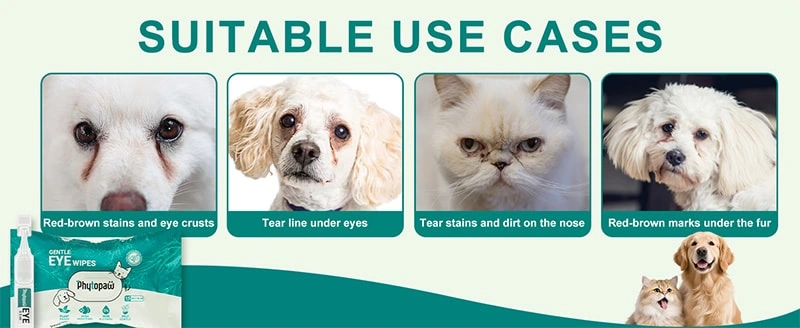
· 1–2× daily during heavy tearing seasons or flat-faced breeds
· Once daily for maintenance
· Always finish with the dry step (your results depend on staying dry, not just staying clean)
This is the everyday logic behind “steady care wins”: small daily steps that protect comfort and appearance without triggering flare-ups in sensitive pets.
1) If my dog has tear stains, does that mean allergies?
Not always. Allergies can contribute, but tear stains are often related to drainage/anatomy or mild ongoing eye irritation.
2) Can food allergies cause tear stains?
They can, but environmental allergies are more common. If you suspect food sensitivity, the most reliable approach is a vet-guided elimination diet, not frequent random switching.
3) Are tear stains harmful?
They can be purely cosmetic, but constant moisture can irritate skin and sometimes lead to secondary infection if left unmanaged—especially in skin folds.
4) How long until I see improvement?
You’ll usually notice less “fresh wetness” quickly with better drying, but visible coat improvement often tracks new hair growth, which can take weeks.
Tear stains are mainly about tears + time + moisture. Allergies can increase tearing and irritation, but anatomy and drainage issues are just as common. The most sensitive-dog-friendly path is a gentle daily clean-and-dry routine, supported by a daily-use tear stain kit—consistent enough to work, gentle enough to keep the skin barrier calm.
References
· VCA Hospitals: Eye Discharge (Epiphora) in Dogs (overview; tears as a symptom, drainage concept).
· VCA Hospitals: Puppy Tear Stains (lists allergies, infection, glaucoma, hair rubbing as causes of excess tears).
· VCA Hospitals: “No need to cry over tear staining” (notes underlying conditions incl. allergies, infections, injury, abnormal eyelash growth).
· PetMD: Dog Tear Stains + Watery Eyes (porphyrin pigment; predisposed breeds; epiphora overview).
· Merck Veterinary Manual: Nasolacrimal/lacrimal apparatus (drainage abnormalities as epiphora causes).
· Chewy Education: Tear stains and porphyrins (consumer-level explanation consistent with pigment mechanism).
· AAHA: Allergies overview + guidelines (context for allergy signs and management framework).

Learn which natural methods can reduce your pet’s exposure to fleas, ticks, and mosquitoes—and why heartworm prevention still requires veterinarian-recommended medication.
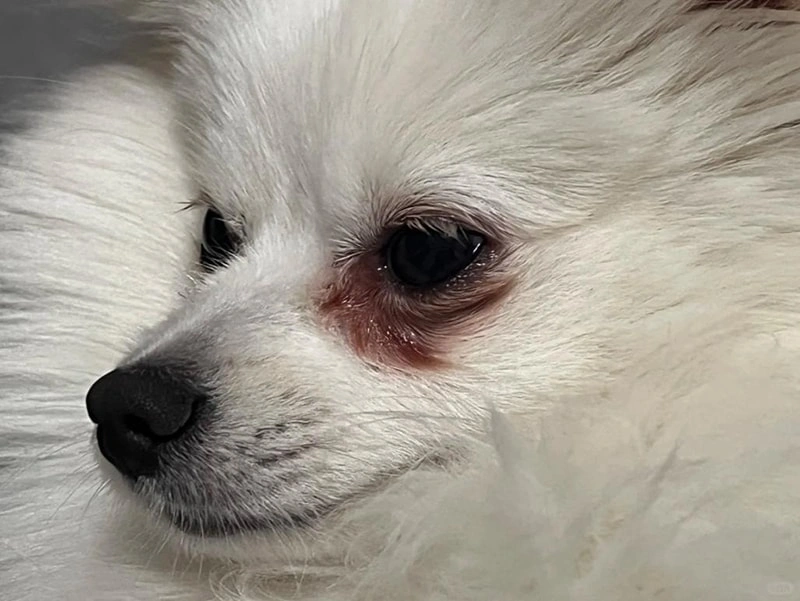
Are natural eye-care products effective for pets? Learn which ingredients are safe around dogs’ and cats’ eyes, what to avoid, and how to build a gentle daily routine.
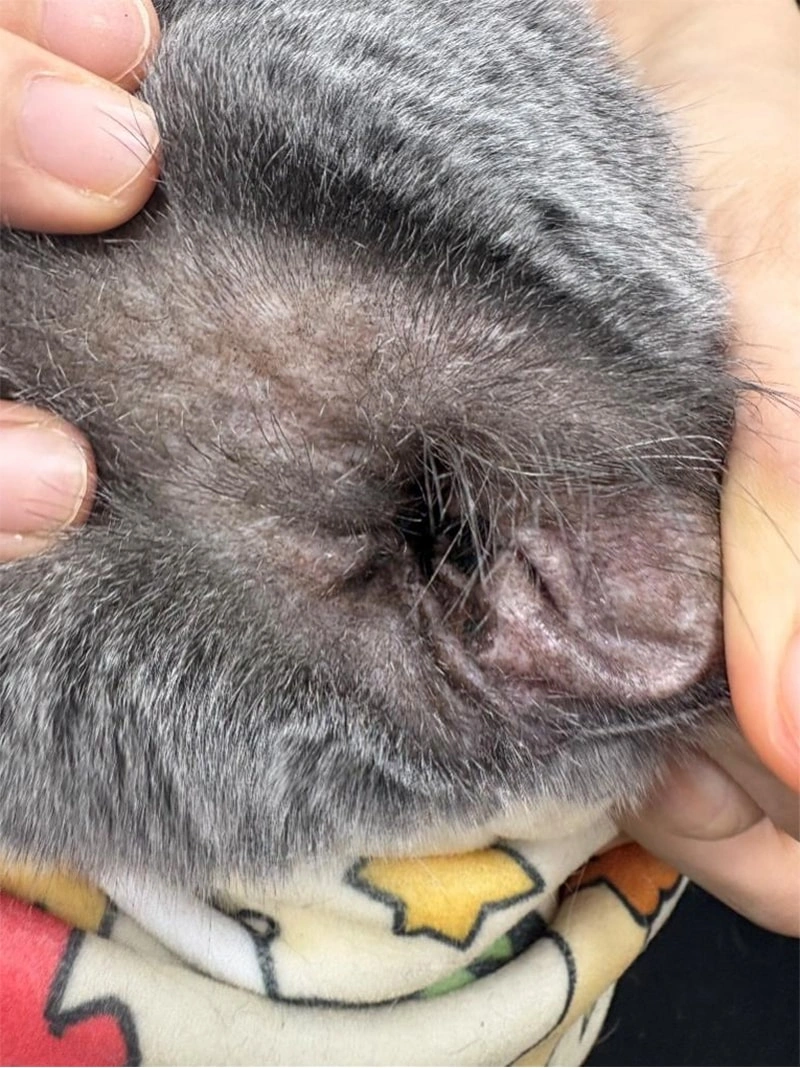
Ear problems are easy to overlook until your pet starts shaking their head, scratching constantly, or developing dark debris inside the ear. Many pet parents ask the same questions: Is it just wax? Could it be ear mites? Can ear mites come back after treatment? And how often should ears be cleaned?

Many pet parents want an easier way to support their cat’s oral health at home. Dental powders are popular because they can be added directly to food, but some formulas use seaweed or kelp-based ingredients. For cats with sensitive digestion, special diets, or thyroid concerns, some families may prefer a seaweed-free cat dental care routine.

A shiny, smooth coat is more than a beauty goal. For dogs and cats, coat condition often reflects overall skin health, nutrition, grooming habits, and daily comfort. A healthy coat should look glossy and feel soft, while dull, brittle, greasy, or flaky fur may suggest dryness, poor grooming, nutritional imbalance, allergies, parasites, or an underlying health issue. VCA notes that skin and coat appearance are useful indicators of general health in both dogs and cats.
Learn how to clean dogs teeth at home, what to use, how often to do it, and simple ways to support better pet dental cleaning as part of a gentle daily routine.
Vaccines and preventive care depend on species (dog/cat), age, lifestyle, and local laws—but there are reliable “core” basics almost every pet needs. Below is a practical schedule you can use to plan vet visits and ask the right questions.
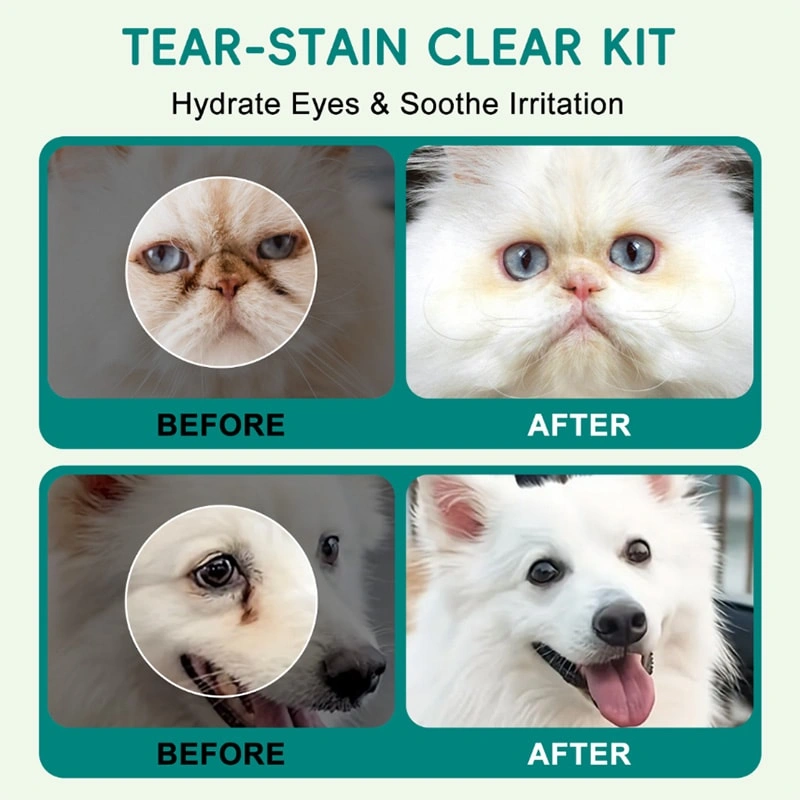
Tear stains are not a diagnosis—they’re a sign that tears (and the pigments inside them) are spending too much time on your dog’s face. Allergies can be one reason tear stains show up or get worse, but they’re only one piece of the puzzle. Many dogs have tear stains primarily because of anatomy, drainage, or mild eye irritation, even with “normal” tear production.
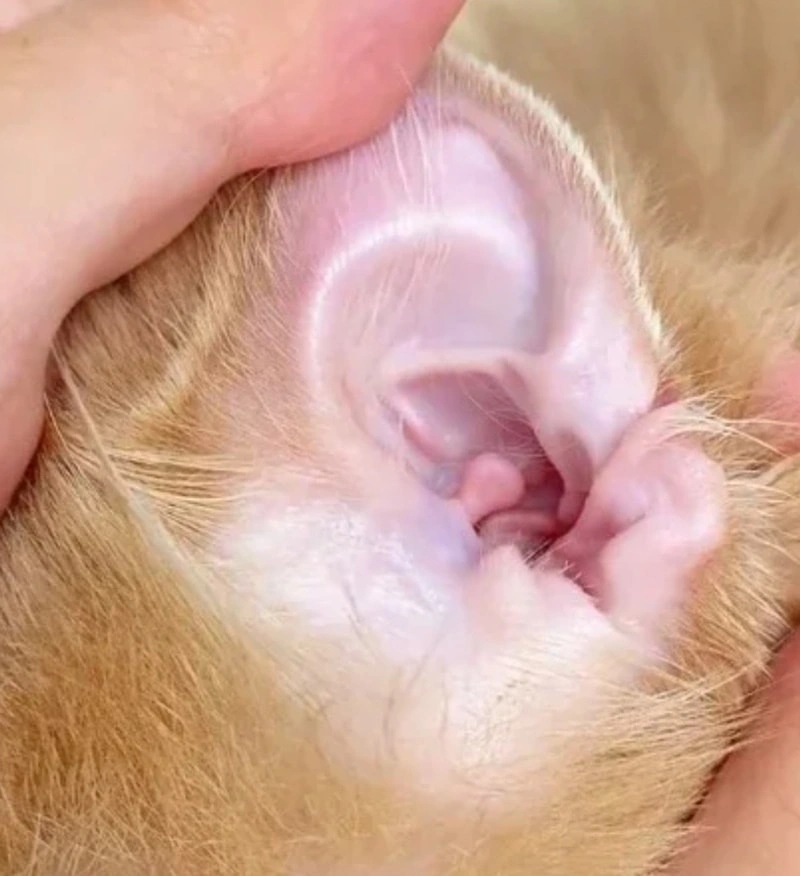
If you notice dark debris in your pet’s ears, it can be wax, ear mites, or an infection—and they can look similar at home. The safest approach is to compare symptoms + debris texture + recurrence, and seek veterinary confirmation when signs are strong.

Daily cleaning can be safe for sensitive dogs—but only when it’s gentle, minimal, and consistent. For many “sensitive skin dogs and cats,” the goal isn’t to scrub the skin spotless; it’s to remove irritants and moisture without stripping the barrier.
Copyright © 2026 by Phytopaw Pet Health Limited All Rights Reserved